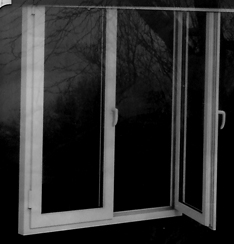
The Core Decision: How Many Panes?
Most veranda glazing in Canada comes in two configurations: double-pane (two glass lites separated by a sealed spacer and gas fill) and triple-pane (three lites with two gas-filled cavities). The distinction matters because Canada's climate zones span a very wide range of heating degree days.
Double-pane units with low-E coatings and argon fill are adequate for verandas in coastal British Columbia (Climate Zone 4–5), where winter lows rarely drop below −10°C for extended periods. In Prairie provinces and Northern Ontario — where −30°C is routine — triple-pane becomes the practical baseline for any space used beyond summer months. The additional glass lite and second sealed cavity roughly doubles the centre-of-glass R-value, reducing heat loss noticeably during prolonged cold spells.
Natural Resources Canada's ENERGY STAR window guidance assigns minimum performance thresholds by climate zone that can be used as a starting point when evaluating glass packages.
Low-E Coatings: Passive Solar vs. Solar Control
Low-emissivity (low-E) coatings are thin metallic layers applied to one or more glass surfaces inside the sealed unit. They reduce infrared heat transfer across the air gap. The coating's solar heat gain coefficient (SHGC) — a number between 0 and 1 — indicates how much solar radiation passes through the glazing.
High-SHGC Low-E (passive solar)
An SHGC above 0.40 allows more solar energy through the glass. On south-facing verandas in cold-winter regions, this means the glass acts as a passive solar collector during daylight hours. Useful in zones where heating costs dominate and overheating in summer is manageable through shading or ventilation.
Low-SHGC Low-E (solar control)
An SHGC below 0.25 blocks most solar radiation. This reduces cooling loads in summer but also limits passive solar gain in winter. More appropriate for west- or east-facing verandas that receive intense afternoon sun, or in warmer southern regions where overheating is a more significant concern than heating costs.
The coating position within the unit (surface 2 or surface 3, counting from outside) affects whether the coating primarily blocks incoming solar radiation or retains interior heat. Most Canadian residential glazing uses surface 2 or 3 depending on the climate application.
Gas Fills
The cavity between glass lites in a sealed unit is filled with a gas that conducts heat less readily than air. Argon is the standard — inert, non-toxic, and widely available. Krypton has lower thermal conductivity than argon and is used in thinner-cavity units where space is constrained, but it adds cost. The performance difference between argon and air in a standard 12–16 mm cavity is measurable; the difference between argon and krypton in the same cavity is smaller.
Gas fill retention over time depends on the quality of the edge seal. Low-quality spacer systems can allow gas to migrate out of the cavity over years, gradually reducing the unit's thermal performance. Warm-edge spacer systems — which use less thermally conductive materials at the glass perimeter — also reduce condensation along the edge and improve long-term seal durability.
Frame Materials in Canadian Conditions
The frame surrounding the insulated glass unit affects both thermal performance and maintenance requirements over the life of a veranda enclosure.
PVC (uPVC) frames
PVC frames have low thermal conductivity and are resistant to moisture and corrosion. They do not require painting and are widely used in Canadian residential construction. In very cold climates, some PVC formulations become brittle; specifying a formulation rated for low-temperature performance is worth confirming with the manufacturer.
Aluminum frames
Aluminum is structurally strong and allows slim sightlines, making it suitable for large glazed panels. Without a thermal break — an insulating barrier separating interior and exterior aluminum — the frame conducts heat efficiently in both directions, reducing the overall unit performance. Thermally broken aluminum systems are the standard for insulated applications in Canada.
Wood and wood-clad frames
Wood frames have moderate thermal performance and are often used in heritage or traditional aesthetics. Wood-clad frames (aluminum or PVC exterior cladding over a wood interior) combine appearance flexibility with reduced exterior maintenance. Both require attention to moisture management at joints and sills.
Glass Thickness and Safety Glazing
Standard residential glass in Canadian veranda applications is typically 3 mm or 4 mm per lite. Larger panels subject to higher wind or snow loads may require 5 mm or 6 mm glass. Where the glazed surface is within 500 mm of a door or in a low-level position accessible to people, tempered or laminated safety glass is required under most provincial building codes. Tempered glass breaks into small fragments rather than large shards; laminated glass holds together when broken due to an interlayer film.
Reading the Window Energy Rating (WER)
The Window Energy Rating (WER) used by ENERGY STAR Canada combines U-factor (heat loss), SHGC (solar gain), and air leakage into a single number. A higher WER indicates better overall energy performance for a Canadian climate. The rating is product-specific — the same glass package in different frame systems will produce different WER scores. When comparing products, comparing WER values for units of similar size and configuration provides a consistent basis for evaluation.
Article last reviewed: May 22, 2026. For current ENERGY STAR thresholds, refer to Natural Resources Canada.